More than half of Army ROTC cadets have a history of medial tibial stress syndrome (the clinical term for shin splints). That number sits between 50% and 56% across military recruit populations, which means your high-achieving track, soccer, or cross-country athlete is part of a very common pattern, not an outlier.
Despite how common shin splints are, they can still trigger a DoDMERB disqualification under specific timing rules. Under DoDI 6130.03 (Change 6, February 3, 2026), the standard disqualifies for a recurrent history of shin splints, periostitis, or tibial stress syndrome within the last 12 months.
Whether DoDMERB shin splints disqualify your applicant comes down to two things: whether there is a recurrent, documented history within the last 12 months, and whether you can document a clean return to full activity.
Key Takeaways
- The current DoDI standard disqualifies for recurrent shin splints, periostitis, or tibial stress syndrome within the last 12 months (DoDI 6.18.d(15)).
- Self-managed shin splints with no clinical record sit in an ambiguous zone (usually fine, but disclose accurately).
- Stress fractures and shin splints are scored under different DoDI sections with different windows.
- Returning to strenuous sport pain-free is the strongest single piece of waiver evidence.
- The exact records the waiver authority wants are listed in Section 6 of this article.
The DoDI Standard for Shin Splints
The standard turns on recurrence within the last year. DoDI 6130.03 disqualifies for a recurrent history of shin splints, periostitis, or tibial stress syndrome within the last 12 months.
"Recurrent periostitis, shin splints, or tibial stress syndrome within the last 12 months." — DoDI 6130.03, Section 6.18.d(15)
What counts as a documented episode
"Recurrent" turns on documented episodes of care, not self-care at home. An episode counts when your child received clinical care from a medical professional.
Treatment includes:
- A clinical evaluation by a physician, sports medicine provider, or athletic trainer working under a clinician's supervision
- Prescribed activity modification (a written or charted instruction to stop or scale back running, jumping, or impact training)
- A physical therapy prescription
- Prescribed orthotics or custom inserts
- Prescribed NSAIDs (a clinician's order, not over-the-counter ibuprofen taken on your own)
- Imaging follow-up ordered by a clinician
What does NOT count as treatment: ice baths, foam rolling, rest weeks your child decided to take, OTC pain relievers, parent-purchased compression sleeves, or coach-directed practice modifications without a clinical referral. Self-care without a chart entry sits outside the DoDI definition.
Why Change 6 matters for your applicant
Under the older framing, two flare-ups anywhere in high school could flag a candidate regardless of how much time had passed. The current standard is cleaner because it is time-bounded. Does your child have a recurrent, documented history of clinician-treated shin splints (roughly two or more episodes, or one chronic episode that required PT, gait analysis, or activity modification) within the 12 months before the DoDMERB exam? If no, the standard is not triggered. If yes, a DQ is on the table, and a waiver case begins.
The 12-month lookback favors candidates who managed their shin splints well during sophomore or junior year and have stayed pain-free through the year leading up to the exam.
After this section, parents understand the exact regulatory language and can place their child's history on the right side of the timeline.
When Shin Splints Trigger a DoDMERB Disqualification
Three scenarios trigger the shin splints DQ, and one adjacent rule catches applicants who think they are clear. Knowing which bucket your child sits in is the first analytical step.
Scenario 1: Active or recent treatment inside the 12-month lookback
This is the cleanest trigger. If your child is currently in PT, on a modified-activity plan, or has visited sports medicine for shin pain during the 12 months before the exam, the recurrent-history standard applies. The DQ letter follows the exam.
Scenario 2: Recent diagnosis with prescribed activity restriction not yet formally lifted
Even if symptoms have resolved, a written restriction with no formal return-to-full-activity note can keep your child inside the window. Paper outranks symptoms at DoDMERB. The medical reviewer reads what is in the chart, not what you tell them on the form.
Scenario 3: Imaging-confirmed MTSS with ongoing follow-up plan
If an MRI or bone scan confirmed medial tibial stress syndrome and the ordering clinician scheduled follow-up imaging or a recheck visit, the case stays open in the chart until that follow-up closes it. An open follow-up plan reads as ongoing treatment.
The bone stress reaction catch (Section 6.19.u)
The shin splints rule is not the only window that touches lower-leg pain. Section 6.19.u covers bone stress reactions:
"Stress reaction in a weight bearing bone within the last 6 months." — DoDI 6130.03, Section 6.19.u
This rule catches applicants who think they are clear of the recurrent shin splints standard. If imaging showed marrow edema or a Fredericson grade 2 or 3 stress reaction (without a discrete fracture line), your child's case shifts to Section 6.19.u with a 6-month window. Read the radiology report carefully. The diagnosis on paper drives which rule applies.
The self-care gap
No clinical record does not equal a DQ. Many applicants managed shin splints with rest, ice, and OTC ibuprofen and never saw a clinician. That history sits outside the standard.
The risk in the self-care zone is mismatch. If a coach letter, athletic trainer note, or school nurse log mentions shin pain that has no clinical follow-up, the medical reviewer may ask why. Disclose accurately on the medical history form and let the absence of clinical records speak for itself.
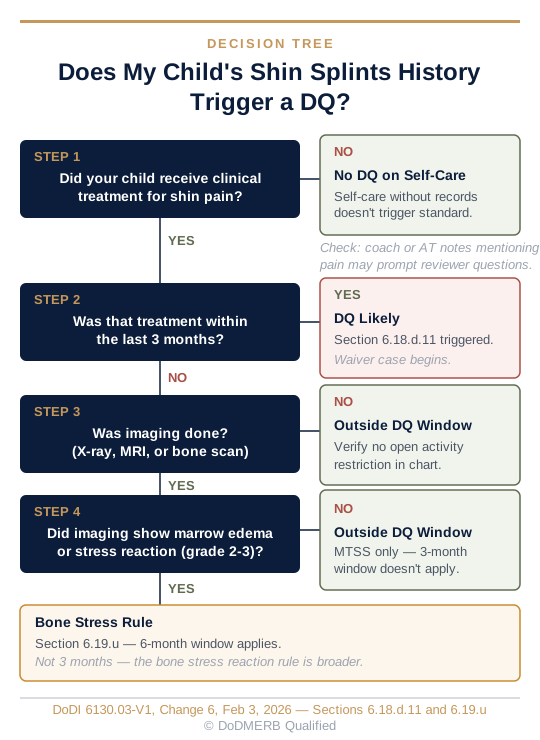
Four questions to match your child's history to the correct DoDI criterion.
After this section, you can match your child's history to a specific scenario or rule it out entirely.
Shin Splints vs. Stress Fracture: How DoDMERB Tells Them Apart
Shin splints and stress fractures sit under different DoDI sections with different timing windows. Families often use these terms interchangeably in conversation. The medical reviewer does not. They read the radiology report and apply the rule that matches the diagnosis on the page.
The three-way distinction
- MTSS (shin splints): Section 6.18.d(15). Recurrent within the last 12 months. Soft-tissue periostitis along the medial tibia, with no bone marrow edema or fracture line.
- Bone stress reaction: Section 6.19.u. Six-month window. MRI shows bone marrow edema without a fracture line, typically Fredericson grade 2 or 3.
- Stress fracture: Section 6.18.d(14). Twelve-month window (single episode within 12 months, or recurrent). MRI shows a discrete fracture line at Fredericson grade 4. This rule has stricter waiver expectations than the other two.
Why disclosure accuracy matters
If the original diagnosis was a stress fracture but the application discloses it as "shin splints," the medical reviewer will pull the imaging and reclassify the case under Section 6.18.d(14). That reclassification looks worse than an accurate disclosure under the right rule from the start. Use the words the radiologist used in the report.
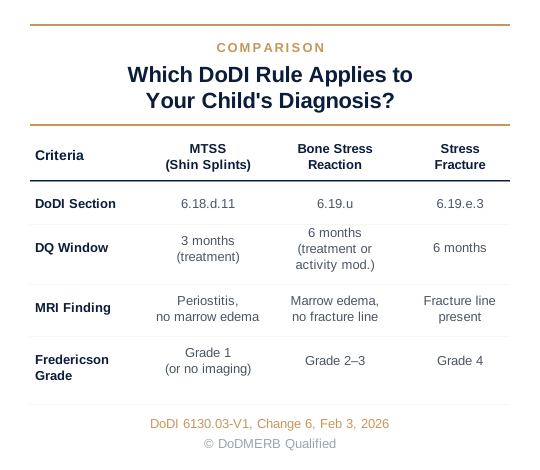
The diagnosis on the radiology report determines which DoDI section and window applies.
Related: DoDMERB Stress Fracture Disqualification: Timing, Waivers, and Documentation
After this section, you can read your child's imaging report and place it under the correct DoDI section.
What the Waiver Authority Reviews
A shin splints DQ opens a waiver case, and the reviewer is looking for a specific evidence pattern. The pattern is the same across services, but the reviewer changes by commissioning path.
Who reviews the waiver
| Commissioning Path | Waiver Authority | Notes |
|---|---|---|
| Service Academies (USMA, USNA, USAFA, USCGA, USMMA) | Service Medical Review Authority | Coordinated through DoDMERB |
| Army ROTC | Cadet Command Surgeon (Fort Knox) | |
| Navy / Marine ROTC | Bureau of Medicine and Surgery (BUMED) | |
| Air Force ROTC | AFROTC Medical / AETC Command Surgeon | Two-step review |
The four evidence pillars
The waiver authority weighs four things when evaluating a shin splints case:
- Resolution on imaging or a clean clinical exam
- A dated clinician note releasing your child to full unrestricted activity
- Time elapsed since last treatment (more elapsed time strengthens the case)
- Demonstrated return to strenuous sport (the strongest single piece of evidence)
Pattern of recurrence raises scrutiny
Even when your child's last documented episode sits well outside the 12-month lookback, a pattern of repeated flare-ups across multiple seasons prompts the reviewer to ask whether the condition is truly resolved or simply waiting for the next training load. Address that pattern directly in the waiver package. Explain what changed (gait analysis, orthotics, training adjustments, footwear, body mechanics work) and pair the explanation with current performance evidence.
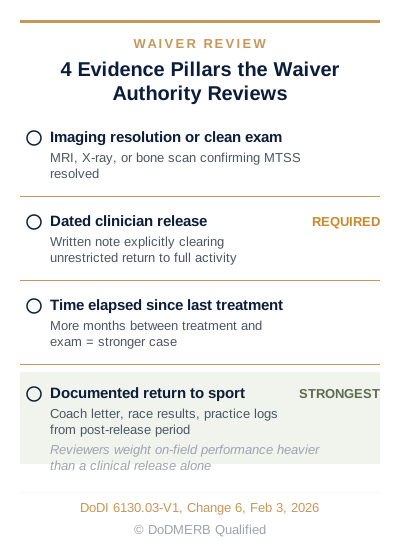
After this section, you understand the four evidence pillars and know which authority reviews your applicant's package.
DoDMERB Qualified
Not sure whether your student's shin splints history triggers a DQ?
We review your applicant's medical timeline against the current DoDI 6130.03 standard and tell you exactly what the waiver authority will look at.
Documentation Checklist for a Shin Splints DQ
Build the waiver package before the DQ letter arrives. Records are easier to gather while clinicians are reachable. Records are submitted only when DoDMERB issues a remedial request. Until then, organize them and keep the folder ready.
The checklist below maps to the four evidence pillars from Section 5.
Medical Records
- All clinic notes mentioning shin pain, MTSS, periostitis, or tibial stress syndrome (dates required)
- Treatment plans: PT prescriptions, activity modification orders, orthotic prescriptions
- Medication records if NSAIDs were prescribed (prescription, not OTC)
Imaging Studies
- Original radiology reports (X-ray, MRI, bone scan if performed)
- Follow-up imaging reports if obtained
- Images on disc or via patient portal (reviewers may request the actual scans)
Return-to-Activity Documentation
- Dated clinician note explicitly releasing to full unrestricted activity
- Physical therapy discharge summary with final assessment
- Sports medicine follow-up note confirming resolution
Return-to-Sport Evidence
- Coach letter on school letterhead confirming full participation in current season
- Race results, game statistics, or practice logs from the post-release period
- Athletic trainer entries showing no recurrence
- Fitness test results (CFA score, school PE test) if available
After this checklist, you have a single organized folder ready to upload when a remedial request arrives.
How to Read the Timing Window: Academy vs. ROTC
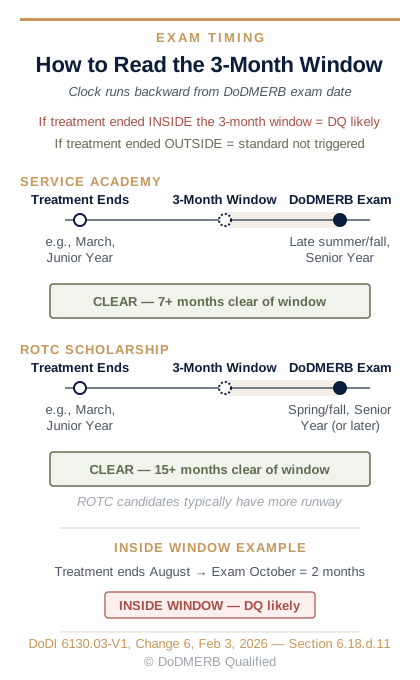
The 12-month recurrence lookback is measured back from the DoDMERB medical exam, not the application submission. Understanding when the exam falls in your child's senior year changes the analysis, because it sets the 12-month window the reviewer looks back across.
Service academy candidates usually complete DoDMERB after preliminary application review, which often lands in late summer through fall of senior year. ROTC scholarship recipients complete DoDMERB after scholarship board selection, which often lands in spring of senior year, or even later for late boards. That natural timeline gives most ROTC candidates more runway than families realize, because a later exam date pushes older episodes out of the 12-month window.
What this means in practice
Picture a candidate whose last documented shin splints episode was in September of junior year. If the DoDMERB exam falls in November of senior year, that episode is more than 12 months back, so it sits outside the lookback and the standard is not triggered on its own. Now picture a candidate treated for a flare-up in February of senior year and again in June, with the exam in October: that is a recurrent pattern inside the 12-month window, and a DQ is likely. What matters is whether documented episodes cluster in the year before the exam, not any single visit.
After this section, you can plan exam timing strategically rather than reactively.
The Bottom Line on Shin Splints and DoDMERB
Shin splints are a manageable issue at DoDMERB if you understand the current standard and the evidence the waiver authority wants. Three pillars hold the analysis together.
First, the current rule disqualifies for recurrent shin splints, periostitis, or tibial stress syndrome within the last 12 months (Section 6.18.d(15)). Second, shin splints, bone stress reactions, and stress fractures are three distinct DoDI criteria with different windows, and disclosure should match the diagnosis on the radiology report. Third, documented return to full strenuous sport is the strongest single piece of waiver evidence in this category.
What to do this week
- Pull every clinic note that mentions shin pain or MTSS
- Request a dated return-to-full-activity note if you do not have one
- Save coach letters, race results, and practice logs in one folder
- Read the imaging report and confirm the exact diagnosis words
- Calendar the DoDMERB exam date relative to last treatment
A shin splints disqualification is not the end of the application. It is the start of a waiver case that, with the right documentation, has a strong record of approval.
You have a plan.
Frequently Asked Questions
My kid had shin splints last track season but is pain-free and back to playing sports. Will DoDMERB disqualify them?
If your child's shin-splint history is not recurrent within the 12 months before the DoDMERB exam, Section 6.18.d(15) is not triggered. Pair the clean timeline with a dated return-to-full-activity note and current sport participation evidence: coach letter, race results, practice logs. That combination gives the medical reviewer no reason to flag it.
Are shin splints and a stress fracture the same thing at DoDMERB?
No. Recurrent shin splints (MTSS) fall under Section 6.18.d(15) with a 12-month window. Stress fractures fall under Section 6.18.d(14) with a 12-month window. Bone stress reactions without a fracture line fall under Section 6.19.u with a 6-month window. Read the radiology report and disclose using the diagnosis the radiologist wrote.
What records should I gather before the DoDMERB exam?
Build a single folder with four buckets: clinic notes mentioning shin pain or MTSS, imaging reports and the underlying scans, a dated clinician release to full unrestricted activity, and return-to-sport evidence (coach letter, race results, practice logs). Do not submit anything unless DoDMERB issues a remedial request.
My kid had shin pain but never saw a doctor. Should we disclose it?
Disclose accurately. Self-managed shin pain with no clinical record sits outside the DoDI definition of "requiring treatment" and does not trigger the standard on its own. If a coach letter or athletic trainer log references shin pain without clinical follow-up, the reviewer may ask why. Answer the medical history questions honestly.
Is a shin splints disqualification waiverable?
Yes. Shin splints DQs are routinely waived when the evidence pattern is solid. The waiver authority weighs resolution on imaging or clinical exam, a dated release to full activity, time elapsed since treatment, and documented return to strenuous sport. Cases with all four pillars track well.
What does the waiver authority actually look at for shin splints?
The reviewer looks at four pillars: resolution on imaging or clinical exam, a dated clinician release, time elapsed since last treatment, and documented return to strenuous sport. On-field performance is a harder test than a clinical release. If your child has a pattern of recurrence, address it directly in the waiver package.
Does the timing window get measured from the application date or the exam date?
The DoDMERB exam date, not the application submission or scholarship board date. The 12-month recurrence window in Section 6.18.d(15) is measured back from the medical exam. ROTC scholarship recipients often complete DoDMERB later in the cycle than service academy candidates, which naturally extends the gap between last treatment and exam date.
The appearance of U.S. Department of Defense (DoD) visual information does not imply or constitute DoD endorsement.