One AFROTC cadet was disenrolled weeks before graduation and owed $144,000. All because of a failed tape test.
Most parents assume DoDMERB handles height and weight screening. It does not. DoDMERB evaluates medical fitness under DoDI 6130.03, but ROTC height and weight requirements are enforced by your student's ROTC cadre under a separate regulation. That distinction matters because it changes who checks, when they check, and what happens if your student fails.
The standards vary by service branch, they are checked at contracting rather than selection, and failing them after your student has accepted scholarship money can trigger full repayment. This guide covers the specific standards for Army, Air Force, Navy, and Marine ROTC programs so you know exactly where your student stands before they sign anything.
Key Takeaways
- DoDMERB does not disqualify candidates for being overweight. Only associated medical conditions (sleep apnea, metabolic disorders) trigger a DQ.
- Each service branch enforces different body fat limits: AFROTC is the strictest for young males at 18%, Army is the most forgiving at 20-24% depending on age. The Air Force and Marines have already adopted waist-to-height ratio (WHtR) as a screening metric.
- Height and weight are not checked during initial scholarship selection. The first real measurement happens at contracting.
- Athletes who exceed the screening weight table get a tape test to measure body fat percentage, not BMI alone.
- Failing body composition standards after contracting can lead to disenrollment and repayment of scholarship funds, potentially exceeding $100,000.
DoDMERB handles medical fitness. ROTC cadre handle body composition. The rest of this guide covers exactly what each service requires.
DoDMERB vs. ROTC Cadre: Who Actually Checks Weight
DoDMERB does not disqualify candidates for being overweight. This is the most misunderstood fact in the ROTC scholarship process, and it leads families to panic about the wrong thing at the wrong time.
Two separate regulations govern two separate processes. DoDI 6130.03 is the medical accession standard that DoDMERB enforces. It covers conditions like heart defects, vision problems, and asthma. DoDI 1308.03 is the body composition standard that ROTC cadre enforce at the unit level, covering height, weight, and body fat percentage.
During the DoDMERB physical exam, your student will be measured and weighed. Those numbers appear in the file. But being 20 or 30 pounds over the screening weight table does not generate a disqualification code.
What triggers a DoDMERB disqualification is a medical condition associated with being overweight. If the examining physician identifies signs of obstructive sleep apnea, metabolic syndrome, or joint problems attributable to excess weight, those conditions are evaluated under DoDI 6130.03 on their own merits.
The practical takeaway for ROTC height and weight requirements: do not delay your student's DoDMERB exam because they are over the weight table. Get the medical exam done on schedule and address body composition separately with the ROTC detachment.
You now know who checks what. Next: when these checks actually happen in the scholarship timeline.
When Height and Weight Are Checked During the ROTC Scholarship Process
Your student does not need to be at weight to apply for an ROTC scholarship. This misconception causes families to either delay applications or skip ROTC entirely when their student is carrying extra weight.
If your student is working toward meeting ROTC height and weight requirements, understanding the timeline gives you room to plan rather than panic.
Application Phase
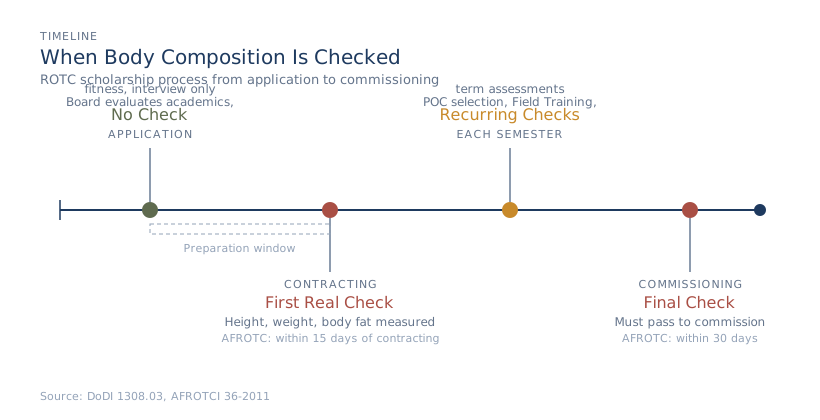
No body composition check occurs during the application or selection process. Your student submits transcripts, test scores, fitness scores, and interview results. The selection board evaluates these factors without ever seeing a scale reading. A student who is 30 pounds over the screening weight can earn a scholarship offer.
Scholarship Activation and Contracting
This is the first real checkpoint. When your student arrives at the ROTC detachment to activate their scholarship and sign a contract, the cadre will measure height, weight, and (if over the screening table) body fat percentage. AFROTC requires this measurement within 15 days of contracting. If your student does not meet standards at this point, the detachment may delay contracting until they do.
Ongoing Checks
Body composition is not a one-time gate. After contracting, your student will be measured at multiple points:
- Each semester or term (varies by detachment)
- POC selection board (AFROTC requires measurement by January 15)
- Field Training or equivalent summer training
- Commissioning (AFROTC requires measurement within 30 days)
The window between scholarship selection and contracting is your preparation window. If your student receives a scholarship offer in spring of senior year and contracts in fall of freshman year, that is several months to get body composition in line.
You now have the timeline. The next four sections cover the specific standards for each service branch.
Army ROTC Height and Weight Standards
Army ROTC uses AR 600-9, the same regulation that governs body composition for the entire active Army. Of the four ROTC programs, Army applies the most forgiving body fat limits for young cadets and is the only service that graduates those limits by age.
Height Requirements
Army ROTC accepts men between 60 and 80 inches (5'0" to 6'8") and women between 58 and 80 inches (4'10" to 6'8"). Heights outside this range require a waiver.
Screening Weight Table
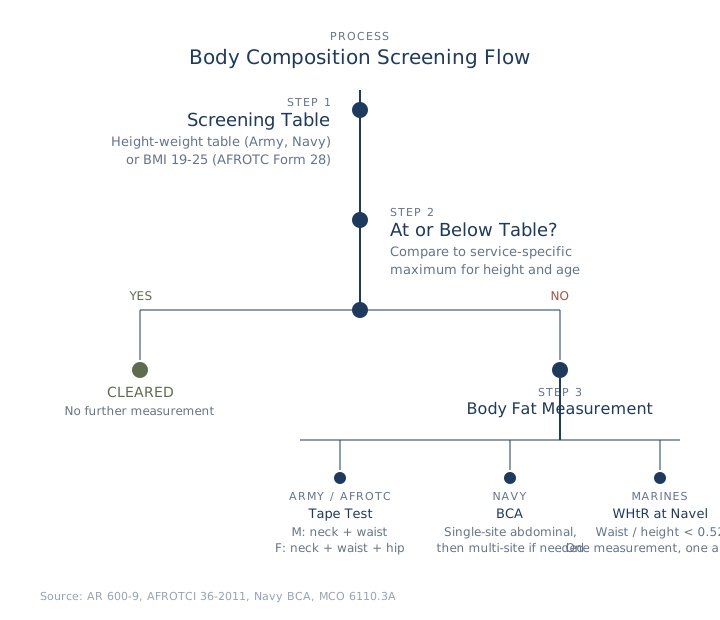
Every cadet is first measured against a height-weight screening table. If your student is at or below the screening weight, no further measurement is required. Here are screening weight maximums for males age 17-20 at common heights:
| Height | Male Max Weight (17-20) |
|---|---|
| 5'6" (66 in) | 163 lbs |
| 5'8" (68 in) | 174 lbs |
| 5'10" (70 in) | 180 lbs |
| 6'0" (72 in) | 191 lbs |
| 6'2" (74 in) | 202 lbs |
For reference, a 5'10" male cadet age 17-20 has a screening range of 132 to 180 lbs. A female cadet at the same height has a range of 119 to 174 lbs. Students below the minimum screening weight may need a physician's letter.
Body Fat Limits by Age
If your student exceeds the screening weight, they move to a body fat measurement via tape test. Army ROTC height and weight requirements use age-graduated body fat limits, meaning older cadets get slightly more room.
Males:
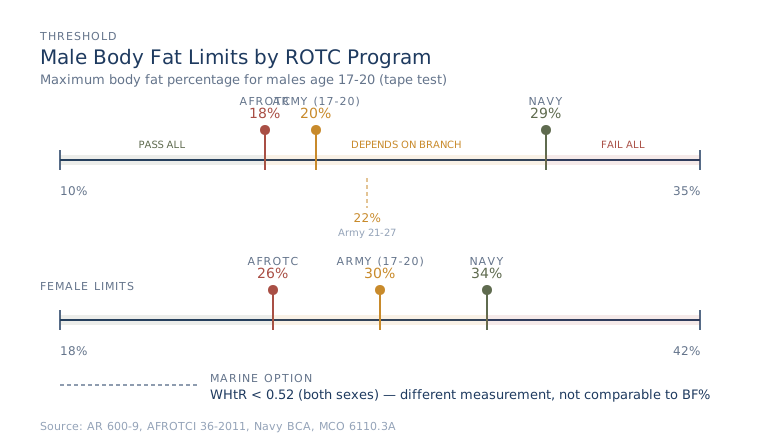
- Age 17-20: 20% maximum
- Age 21-27: 22% maximum
- Age 28-39: 24% maximum
Females:
- Age 17-20: 30% maximum
- Age 21-27: 32% maximum
- Age 28-39: 34% maximum
A common scenario from ROTC forums: a parent described their 6'1", 236-pound son at Texas A&M who was 30 pounds over the screening table. Under Army standards, as long as his tape-tested body fat was under 20% for his age group, he would pass. Two consecutive semester failures would trigger disenrollment proceedings and potential repayment or four years of active duty obligation.
Army standards covered. Next: Air Force ROTC, which enforces the strictest body fat limits for young males.
Air Force ROTC Height and Weight Standards
AFROTC applies the strictest body fat standards of any ROTC program, with no age-based adjustment. An 18-year-old freshman and a 25-year-old graduate student face the same limits. This is where most ROTC height and weight requirements surprises happen.
BMI 19-25 Screening Table (Form 28)
AFROTC uses a BMI-based screening table rather than a simple height-weight chart. Your student must fall between BMI 19 and BMI 25 to pass initial screening. Here is the full Form 28 table:
| Height (inches) | Minimum Weight (lbs) | Maximum Weight (lbs) |
|---|---|---|
| 58 | 91 | 119 |
| 60 | 97 | 128 |
| 62 | 104 | 136 |
| 64 | 110 | 145 |
| 66 | 117 | 155 |
| 68 | 125 | 164 |
| 70 | 132 | 174 |
| 72 | 140 | 184 |
| 74 | 148 | 194 |
| 76 | 156 | 205 |
| 78 | 164 | 216 |
| 80 | 173 | 227 |
Body Fat Limits
If your student exceeds the screening table maximum, the detachment measures body fat via tape test. AFROTC limits are flat across all ages:
- Males: 18% maximum
- Females: 26% maximum
A male cadet at 19% body fat passes Army ROTC and fails AFROTC. That two-percentage-point gap catches athletes and muscular students who carry dense body weight.
Waist-to-Height Ratio Transition
The Air Force announced waist-to-height ratio (WHtR) as an alternative screening metric in early 2023, with implementation beginning April 2023. The standard requires a ratio of 0.55 or below. Your student's waist circumference (in inches) divided by their height (in inches) must be 0.55 or less.
For a cadet who is 70 inches tall, that means a maximum waist circumference of 38.5 inches. WHtR tends to be more favorable for muscular body types than BMI alone. Implementation varies by detachment, so your student should confirm which screening method their unit uses.
AFROTC standards covered. Next: Navy and Marine ROTC, which operate as two separate programs under one roof.
Navy and Marine ROTC Height and Weight Standards
NROTC is two programs with two different standards running out of the same detachment. A Navy Option midshipman and a Marine Option midshipman sitting in the same classroom face different body fat limits, different measurement methods, and different governing regulations.
Navy Option
Navy ROTC applies the Navy's Body Composition Assessment (BCA) program. The screening process starts with height and weight against Navy tables. If your student exceeds the screening weight, they proceed to body fat measurement.
Body fat limits for Navy accession:
- Males: less than 29% body fat
- Females: less than 34% body fat
The Navy BCA method starts with a single-site abdominal circumference measurement. If that measurement exceeds the limit, the assessor moves to a two or three-site circumference measurement for a more precise reading. This multi-step approach gives borderline students a second chance within the same assessment.
Marine Option
Marine Option midshipmen follow MCO 6110.3A, which applies the most modern measurement approach in the DoD. Marines use waist-to-height ratio as their primary standard for ROTC height and weight requirements.
The requirement: WHtR less than 0.52, measured at the navel.
For a 72-inch (6'0") Marine Option midshipman, that means a maximum waist measurement of 37.4 inches at the navel. This is stricter than the Air Force WHtR standard of 0.55 but avoids the body fat percentage calculation entirely.
The Marine standard eliminates the tape test math that creates measurement variability. One number, one measurement site, one clear answer. Marines adopted this approach specifically because circumference-based body fat calculations had too much measurement error.
All four service standards covered. Before the comparison table, a note about next steps.
DoDMERB Qualified
Not Sure Which Standards Apply to Your Student?
DoDMERB Qualified helps families navigate the medical and body composition requirements for ROTC and service academy applicants. Contact us about DoDMERB Consulting.
Service-by-Service Comparison: Which ROTC Program Is Strictest?
The difference between passing and failing ROTC body composition standards depends entirely on which service branch your student chose. The same 19-year-old male at 19% body fat passes three programs and fails one.
| Standard | Army ROTC | AFROTC | NROTC (Navy) | NROTC (Marine) |
|---|---|---|---|---|
| Male BF% Limit | 20% (age 17-20) | 18% | 29% | WHtR < 0.52 |
| Female BF% Limit | 30% (age 17-20) | 26% | 34% | WHtR < 0.52 |
| Age-Graduated? | Yes | No | No | No |
| Primary Method | Tape test | Tape test | BCA (circumference) | WHtR at navel |
| Screening Tool | Height-weight table | BMI 19-25 (Form 28) | Height-weight table | WHtR |
| Governing Regulation | AR 600-9 | DoDI 1308.03 | Navy BCA Program | MCO 6110.3A |
"One AFROTC cadet was disenrolled weeks before graduation and owed $144,000, all because of a failed tape test."
AFROTC is the strictest program for young males. At 18% maximum body fat with no age adjustment, a muscular 20-year-old cadet has less margin than the same cadet would have in any other branch.
Army is the most forgiving for young cadets and becomes more so with age. The 20% limit at age 17-20 gives four percentage points of additional room over AFROTC, and that gap widens to six points by age 28.
Navy offers the most room at 29% for males, but most NROTC midshipmen aim for competitive communities (aviation, submarines, surface warfare) where fitness standards beyond the minimum matter.
Marines use the most modern approach. WHtR eliminates multi-site tape test calculations and associated measurement error. The 0.52 threshold is strict, but the measurement itself is straightforward and reproducible.
You can now compare your student's body composition against all four programs. Next: how these measurements actually work.
How Body Fat Is Measured: Tape Test, BMI, and WHtR Explained
The tape test is the most consequential measurement most families have never heard of. It determines whether an over-screening-weight cadet passes or fails, and the technique matters as much as the number.
Tape Test Measurement Points
For males, the tape test measures neck circumference and waist circumference. The calculation uses these two measurements plus height to estimate body fat percentage via a DoD formula table.
For females, the tape test measures neck, waist, and hip circumference. The three-site measurement produces a body fat estimate.
How the tape is placed, how tightly it is pulled, and where exactly it sits all affect the result. A half-inch difference in waist measurement can swing body fat by a full percentage point.
Waist-to-Height Ratio: The New Standard
WHtR is simpler. Measure waist circumference at the navel, divide by height in inches. The Air Force standard is 0.55 or below. The Marine standard is 0.52 or below. One measurement, one division, one answer.
The DoD adopted WHtR partly because it reduces measurement error and partly because it correlates better with metabolic health risk than BMI or tape-tested body fat percentage.
The Army has also modernized its approach. In June 2024, the Army introduced a single-site abdominal circumference measurement via ALARACT 053/2024, replacing the previous neck-plus-waist method. This change under AR 600-9 brings Army closer to the Marine and Air Force approach.
You now understand how measurements work and where error creeps in. Next: what happens if your student fails.
What Happens If Your Child Fails, and How to Fix It
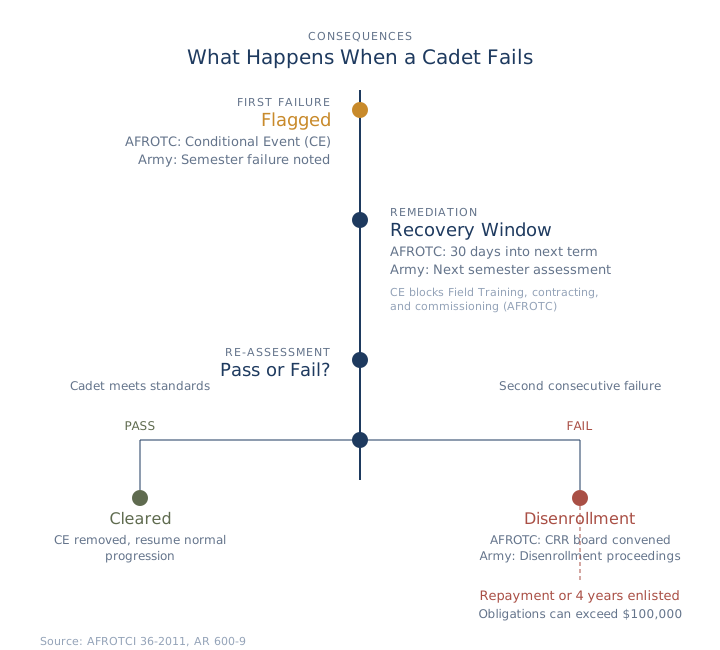
A single failed body composition check will not end your student's ROTC career. Two in a row might. Every service has a remediation process, but the clock starts ticking the moment your student is flagged.
Consequences by Service
AFROTC uses a progressive system. A first failure triggers a Conditional Event (CE). Your student has until 30 days into the next academic term to pass. If they fail again, the case goes to a Conditional Review Board (CRR). A CE blocks Field Training attendance, delays contracting, and prevents commissioning.
Army ROTC allows two consecutive semester failures before initiating disenrollment. The consequence is either repayment of all scholarship funds received or completion of four years on active duty as an enlisted soldier. The Texas A&M parent forum case illustrates this: a cadet 30 pounds over screening weight faced disenrollment with full repayment after two failed semesters.
Navy and Marine ROTC follow their respective service remediation programs, with more command-level discretion than AFROTC.
Remediation Strategies
As one Army officer put it: "The Army doesn't care if your son can bench 300 lbs. If he can't break 15:54 on the two mile run," the issue is cardiovascular fitness, not strength. Reducing body fat requires a caloric deficit and cardiovascular training.
Pre-Measurement Checklist
- Measure height and weight first thing in the morning (time of day affects results)
- Army: check against AR 600-9 Table B-1 screening weights
- AFROTC: verify BMI falls between 19 and 25 per Form 28
- Calculate WHtR (waist in inches divided by height in inches, target 0.55 or below)
- If over screening weight, measure neck, waist, and hip circumference at home
- Aim for body fat 3-5% below the service limit to build margin for measurement variability
Running, swimming, and cycling should form the base of your student's fitness program. Building neck muscle mass also helps the tape test calculation, because a larger neck circumference lowers the body fat estimate in the DoD formula.
If your student carries scholarship funds and body composition is a concern, consider dropping to non-scholarship status to remove the financial risk while working toward ROTC height and weight requirements.
You now know the consequences and the path forward. Below are the most common questions parents ask.
ROTC Height and Weight Requirements FAQ
Will DoDMERB disqualify my student for being overweight?
No. DoDMERB evaluates medical fitness under DoDI 6130.03, not body composition. Only associated medical conditions like sleep apnea or metabolic disorders trigger a DQ.
Does my student need to meet weight standards to receive a scholarship?
Not for selection. The scholarship board does not perform a body composition check. Your student must meet standards at contracting, when they activate the scholarship at their detachment.
My student is a football player who exceeds the weight table. Will they be disqualified?
Not necessarily. Students over the screening weight are tape-tested for body fat percentage. A muscular athlete at 15% body fat passes every service's standard regardless of scale weight.
What happens if my student fails body composition after contracting?
The service places your student in a remediation program. Continued failure triggers disenrollment and potential repayment of all scholarship funds. AFROTC uses a Conditional Event system. Army allows two consecutive semester failures before action.
Are the standards different by service branch?
Yes. Army uses age-graduated body fat limits (20% for males 17-20). AFROTC enforces a flat 18% for all males. Navy allows up to 29%. Marines use waist-to-height ratio (less than 0.52) instead of body fat percentage.
When is body composition actually checked?
Not during scholarship selection. The first check occurs at contracting. After that, expect checks each semester, before POC selection or Field Training, and within 30 days of commissioning.
Is there a minimum height for ROTC?
Yes. Army requires men to be at least 60 inches (5'0") and women at least 58 inches (4'10"). AFROTC starts at 58 inches. Heights below these minimums require a waiver.
Can being underweight cause problems?
Rarely. Most services set a minimum screening weight at BMI 19. A physician's letter confirming good health typically resolves the issue.