A single therapy note from sophomore year can trigger a DoDMERB disqualification. Most parents do not learn this until the DQ letter arrives. The good news: anxiety is among the most commonly waived conditions across all commissioning sources.
The COVID era produced a threefold increase in positive anxiety and depression screens among Americans, according to US Census Bureau Household Pulse Survey data. Anxiety and DoDMERB qualification is now the most frequent mental health question families bring to us at DoDMERB Qualified.
An anxiety diagnosis alone does not disqualify your child. Missing the medication timeline does. This guide covers the exact DoDI 6130.03 criteria, the two 36-month clocks your family needs to track, and the documentation that wins waivers.
Key Takeaways
- Two separate 36-month rules exist: one for the anxiety diagnosis itself (6.28.q) and one for any psychotropic medication (6.28.w)
- Therapy alone can disqualify if cumulative outpatient counseling exceeded 12 months, even without any medication history
- Adjustment disorder carries only a 6-month lookback versus 36 months for GAD, social anxiety, or panic disorder
- The 36-month medication clock runs from the last prescription fill date, not the last dose taken or the date a doctor said "stop"
- Telehealth platforms like BetterHelp and Talkspace create formal clinical records that DoDMERB can request
- Resolved anxiety is among the most commonly waived conditions. RAND data on Army enlisted recruits shows waivered service members perform comparably to their peers
DoDMERB Anxiety Disqualification Criteria: The Exact Rules Under DoDI 6130.03
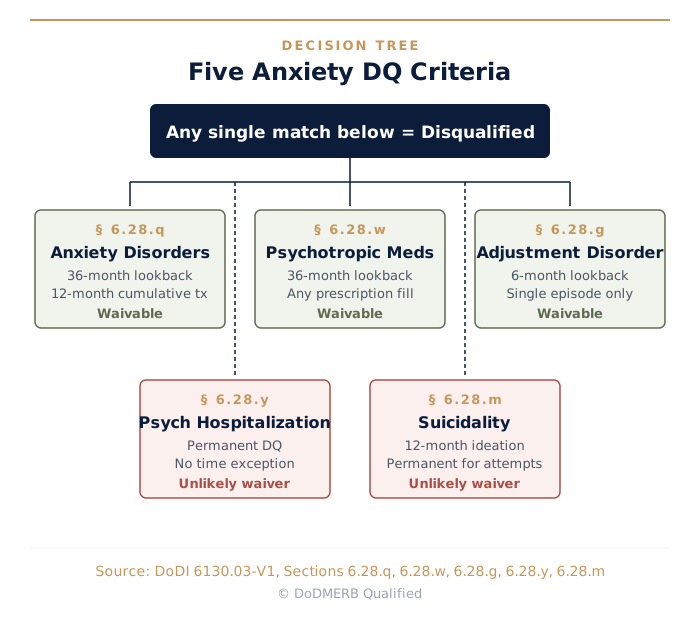
There are five separate ways an anxiety history can trigger a DoDMERB disqualification. Most families only know about one.
Section 6.28.q: Anxiety Disorder Criteria
"History of anxiety disorders if (1) Outpatient care including counseling was required for longer than 12 cumulative months. (2) Symptomatic or treatment within the previous 36 months. (3) The applicant required any inpatient treatment in a hospital or residential facility. (4) Any recurrence. (5) Any suicidality (in accordance with Paragraph 6.28.m.)" — DoDI 6130.03, Section 6.28.q
These are OR conditions. Triggering any single one is independently disqualifying.
Section 6.28.w: The Medication Rule
"History of prescription with psychotropic medication within the previous 36 months, unless a shorter period is authorized in another standard." — DoDI 6130.03, Section 6.28.w
A short course of Zoloft at age 15 triggers this standard if the last fill was within the 36-month window.
Section 6.28.g: The Adjustment Disorder Exception
"History of a single adjustment disorder if treated or symptomatic within the previous 6 months, or any history of chronic (lasting longer than 6 months) or recurrent episodes of adjustment disorders." — DoDI 6130.03, Section 6.28.g
A single episode only looks back 6 months, compared to 36 months for GAD or panic disorder. Chronic adjustment disorder (lasting more than 6 months) or recurrent episodes are disqualifying regardless of timing.
The Absolute Disqualifiers
Section 6.28.y disqualifies for prior psychiatric hospitalization for any cause. This is permanent, with no exception for voluntary admissions.
Section 6.28.m disqualifies for any history of suicide attempts, suicidal gestures, or suicidal ideation with a plan. Any suicidal ideation within the previous 12 months is also disqualifying. A waiver is highly unlikely unless the documented event was not actually suicidality — for example, a clinician's note that was coded incorrectly or language in a record that does not reflect genuine suicidal intent.
Anxiety-Related DQ Criteria Comparison
| DoDI Section | Condition | Lookback Window | Trigger | Waivable? |
|---|---|---|---|---|
| 6.28.q | Anxiety Disorders (GAD, social, panic) | 36 months / 12 mo cumulative | Symptoms, treatment, counseling, recurrence, or suicidality | Yes |
| 6.28.w | Psychotropic Medication | 36 months | Any prescription fill | Yes |
| 6.28.g | Adjustment Disorder (single episode) | 6 months | Treatment or symptoms | Yes |
| 6.28.y | Psychiatric Hospitalization | Permanent | Any inpatient stay | Unlikely |
| 6.28.m | Suicidality | 12 months (ideation) / permanent (attempts) | Any history | Unlikely |
If your child's history touches any of these criteria, a DQ is likely. But resolved anxiety is among the most commonly waived conditions.
After this section, you should know exactly which DoDI criteria apply to your child's specific anxiety history.
Anxiety Diagnosis Types and How DoDMERB Treats Each One Differently
The difference between an adjustment disorder diagnosis and a generalized anxiety disorder diagnosis can mean 30 extra months of waiting. The specific words on your child's medical record matter more than the treatment itself.
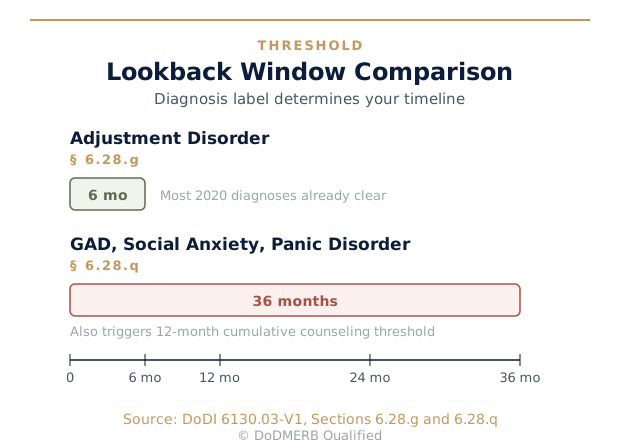
GAD, Social Anxiety, Panic Disorder: The 36-Month Category
Generalized anxiety disorder, social anxiety disorder, and panic disorder all fall under Section 6.28.q with identical criteria. The 12-month cumulative treatment threshold and the 36-month recency window apply equally to all three, regardless of severity.
Adjustment Disorder with Anxiety: The 6-Month Category
Adjustment disorder falls under Section 6.28.g, and the lookback window is dramatically shorter. A single episode is only disqualifying if treated or symptomatic within the previous 6 months.
The catch: chronic adjustment disorder (lasting longer than 6 months) or recurrent episodes are disqualifying regardless of timing. But a single, brief episode that resolved more than 6 months ago may not trigger a DQ at all.
Many teens received adjustment disorder diagnoses during 2020 and 2021. Most of those are already well outside the 6-month window for a 2026 DoDMERB exam.
"Anxiety NOS" and Other Specified Anxiety
Non-specific diagnoses still trigger a full DoDMERB review. One AFROTC cadet with a history of "anxiety (other specified)" faced the standard review process despite the vague diagnostic label. If the record says "anxiety" in any form, DoDMERB applies 6.28.q standards.
When the Diagnosis on Record Does Not Match Reality
One academy-accepted student was medically disqualified for "mood disorder" after mentioning anxiety to a pediatrician during a routine well-child visit. No formal diagnosis was made. The clinical note was enough. What matters is what is written in the medical record, not what actually happened.
Related: If your child has both ADHD and anxiety history, the DoDMERB implications overlap. See our ADHD and DoDMERB waiver guide for the ADHD-specific criteria and medication timelines.
After this section, you should know which specific DoDI standard applies to your child's diagnosis and whether the 6-month or 36-month window governs your timeline.
The 36-Month Medication Rule: What "Off Medication" Actually Means for DoDMERB
The 36-month medication clock does not start when your child swallows their last pill. It starts on the date of the last prescription fill. That distinction has cost families months of unnecessary waiting.
How the 36-Month Clock Works
DoDMERB counts backward 36 months from the exam date. The clock is generally interpreted as running from the last prescription fill date in pharmacy records, not the last dose taken or the date the prescription was written.
Example: a prescription filled in January 2023 clears the 36-month window in approximately January 2026. Even a reduced taper dose counts.
Two Separate Clocks Running Simultaneously
Two independent clocks govern your child's qualification:
- 6.28.w (medication clock): psychotropic medication prescribed within 36 months
- 6.28.q (anxiety disorder clock): treatment or symptoms within 36 months
Both must be cleared independently. Consider this scenario: medication stopped 38 months ago, but therapy continued until 24 months ago. The medication clock is clear. The anxiety disorder clock is still active. Your child would still receive a DQ under 6.28.q.
Tapering Timelines and What Counts
A common SSRI taper takes 4 to 8 weeks for standard doses and longer for higher doses. The last taper dose, even at a fraction of the original dosage, is the start of the 36-month window. A supervised taper provides better documentation for any future waiver packet than abrupt discontinuation. Have the prescribing physician document the taper schedule in writing with exact dates.
PRN and As-Needed Prescriptions
PRN anxiolytics like hydroxyzine or benzodiazepines prescribed on an as-needed basis still trigger the 36-month window. The prescription date matters even if the medication was rarely taken. If a refill was obtained, even if the pills were never used, the fill date resets the clock.
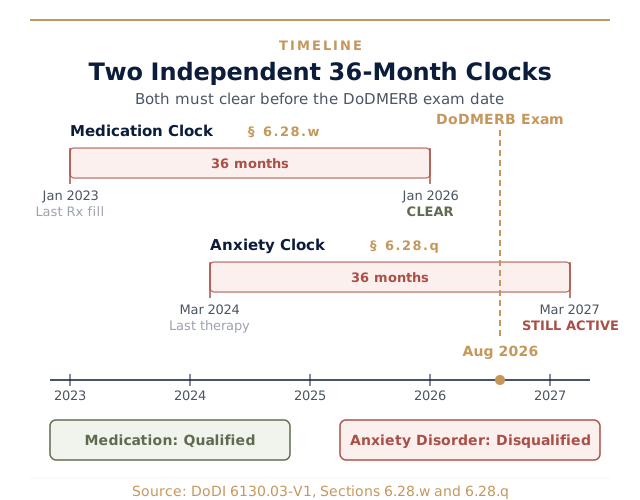
Calculate your child's 36-month date from the last pharmacy fill. If the DoDMERB exam falls within that window, prepare for a DQ and begin building the waiver packet immediately.
After this section, you should be able to calculate the exact date your child's 36-month medication window clears and know which documents to gather.
Therapy Without Medication: Does Counseling Alone Disqualify Your Child?
Choosing therapy instead of medication does not protect your child from a DoDMERB disqualification. If cumulative outpatient counseling exceeded 12 months, the DQ criteria are met with no prescription required.
The 12-Month Cumulative Counseling Threshold
Section 6.28.q, criterion 1 is explicit: outpatient care including counseling that exceeded 12 cumulative months is disqualifying. The word "cumulative" means total time across all providers, not consecutive months with a single therapist.
Example: 14 months of therapy-only GAD treatment triggers a DQ on both the duration ground (exceeding 12 months) and the recency ground (if within 36 months). No medication was involved. Short-term therapy that totaled less than 12 months and ended more than 36 months ago may clear both thresholds.
Telehealth Platforms Create Records DoDMERB Can Request
BetterHelp and Talkspace intake questionnaires capture detailed mental health history. Licensed therapists on these platforms maintain formal clinical records releasable through an Authorization for Release of Protected Health Information form.
What If Your Child Had Only a Few Sessions?
Brief counseling totaling less than 12 months that ended more than 36 months ago may clear both DQ thresholds. But disclosure is still required on the DD Form 2807-2 medical history survey. Concealment is not a strategy. It is a path to permanent disqualification if the records surface later.
Quick Comparison: Therapy-Only Outcomes
| Therapy Scenario | DQ Triggered? | Waiver Needed? |
|---|---|---|
| Therapy only, under 12 months total, ended more than 36 months ago | Unlikely | No |
| Therapy only, over 12 months total, ended within 36 months | Yes (two grounds) | Yes |
| Therapy plus medication, ended within 36 months | Yes (two or three grounds) | Yes, for each |
After this section, you should know whether your child's therapy history triggers a DQ and what records exist from telehealth platforms.
DoDMERB Anxiety Waiver Process: How Waivers Work and What Wins Approval
DoDMERB does not grant waivers. The service academy or ROTC program your child applied to makes that decision. Each branch maintains different standards, different timelines, and different approval rates.
Who Makes the Waiver Decision
DoDMERB assigns disqualification codes. Waiver authority sits with the individual services. Army ROTC and Navy ROTC automatically consider applicants for a waiver upon DQ. Service academy waiver initiation may be more selective. Do not assume any branch is an easy path.
Waiver Timeline Expectations
The basic DoDMERB review takes 6 to 8 weeks after the physical exam. A standard waiver adds weeks to months. Complex mental health cases have taken 6 to 8 months. Plan for up to 12 months total when anxiety history is involved.
What "Convincing Stability" Means
The USAF Academy provides the clearest language on what waiver reviewers look for:
"A history of depressive or anxiety symptoms may be considered for waiver if treatment has been completed and a period of convincing stability demonstrated without need for ongoing medication or psychotherapy." — USAF Academy Medical Requirements
The academy further states that applicants with "unresolved mental health issues" and those with "prolonged/recurrent or more severe diagnoses are unlikely to be considered waivable."
As a practical guideline, waiver authorities typically look for roughly 24 months after documented remission — meaning a doctoral-level provider (MD, DO, PhD, or PsyD) states the condition is in remission with no ongoing medication or therapy. Simple, single-diagnosis cases have sometimes been considered at 12 to 18 months; comorbidities or a history of hospitalization push the window toward the full 24 months or longer.
Documentation That Wins Waivers
Clinician Letter Requirements
- Full credentials, license number, and contact information on letterhead
- Explicit DSM-5 diagnosis with dates of first treatment and duration
- Description of treatment modalities used (therapy, medication, or both)
- Formal discharge date, not just "stopped attending sessions"
- Current symptom-free status with specific clinical observations
- Functional examples: academic performance, extracurricular involvement, stress management
- Explicit statement of military suitability in the clinician's professional judgment
Supporting Documentation
- Complete pharmacy records showing every fill date through the last fill
- Recent mental health evaluation (within 6 to 12 months of application)
- Evidence of sustained stability: transcripts, leadership positions, athletic participation
Waivers for resolved anxiety are granted regularly. Applying to multiple programs increases the probability of at least one approval.
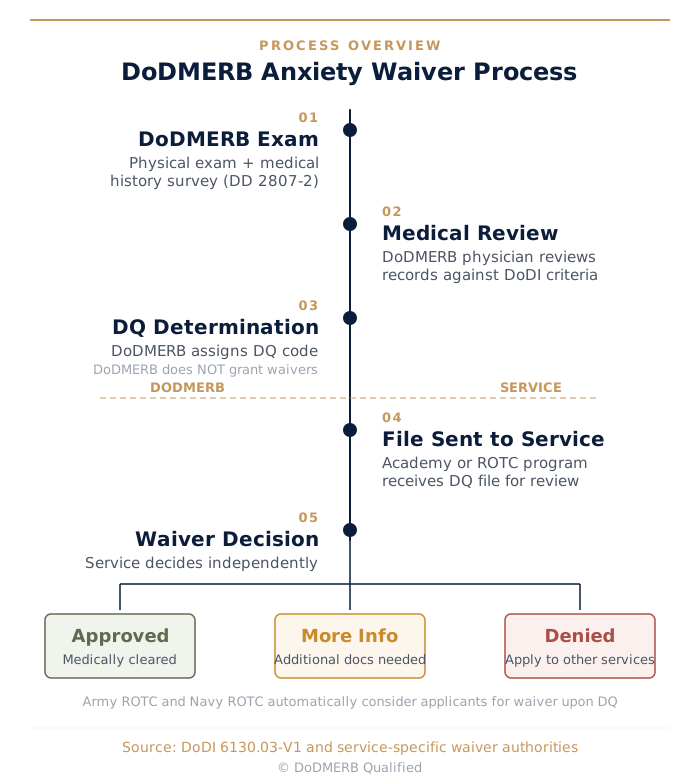
After this section, you should understand who decides your child's waiver, how long it takes, and what documentation to prepare.
DoDMERB Qualified
Not sure how your child's anxiety history affects their DoDMERB timeline?
DoDMERB Qualified evaluates your student's specific diagnosis, medication history, and treatment dates against each service's requirements, so you stop guessing and start planning.
COVID-Era Anxiety Diagnoses: What Parents of Current Applicants Must Know
If your child was diagnosed with anxiety during 2020 or 2021, the timing may actually work in your favor. The 36-month window from a 2020 diagnosis cleared in 2023. For most COVID-era cases, the math now favors the applicant.
The COVID Mental Health Surge by the Numbers
US Census Bureau data showed a threefold increase in positive anxiety and depression screens during 2020 compared to 2019. Only 23% of Americans were eligible to serve in 2023, and mental health history is a major contributor to that shrinking pool.
Timeline Math for COVID-Era Diagnoses
A 2020 diagnosis with treatment ending in 2020 cleared the 36-month window in 2023. A 2021 diagnosis with treatment ending mid-2021 cleared mid-2024. Both are clear for a 2026 DoDMERB exam. If treatment continued into 2022 or 2023, one or both 36-month windows may still be active. Calculate the medication clock and the treatment clock independently.
COVID-era adjustment disorder diagnoses (single episode, less than 6 months) cleared the 6-month lookback under Section 6.28.g long ago.
Policy Momentum Toward Reform
In November 2022, the DoD updated DoDI 6130.03 accession standards, revising criteria for multiple medical conditions and moving toward qualification without a waiver when specific treatment timelines are met. RAND Corporation research found that Army enlisted recruits granted mental health waivers between 2001 and 2012 performed as well or better than non-waivered peers. While this data covers enlisted accessions, not officer accessions directly, it reflects the broader trend that resolved mental health history does not predict poor military performance.
If your child's COVID-era treatment ended in 2021 or earlier, the 36-month windows have likely cleared. Confirm with pharmacy and therapy records before the DoDMERB exam.
Related: For a full overview of the medical certification process, see our DoDMERB process guide.
After this section, you should know whether your child's COVID-era diagnosis still falls within the DoDMERB lookback windows.
Parent Pre-Application Checklist: What to Do Now If Your Child Has Anxiety History
The best time to start preparing for DoDMERB is not senior year. It is the moment your child expresses interest in a service academy or ROTC, even if that is freshman year.
Step 1: Audit Every Mental Health Record
Obtain copies from every provider: pediatrician, therapist, psychiatrist, school counselor, and telehealth platforms. Look for any mention of "anxiety," "depression," or "mood disorder" in routine visit notes. Even a casual well-child visit note can trigger a DQ. Know what exists before your child answers 112 questions on the DD Form 2807-2.
Step 2: Map the Timeline
Document these dates from records, not from memory:
- First documented diagnosis date
- Treatment start and end dates for therapy and medication separately
- Last prescription fill date from pharmacy records
- Last therapy session date
Then calculate all windows relative to your child's expected DoDMERB exam date.
Step 3: Engage the Treating Provider Early
Six to twelve months before application, begin documenting stability with your child's treating provider. The provider should prepare both a formal discharge letter and a waiver support letter if needed. If treatment is ongoing, discuss a timeline for supervised discontinuation early enough to allow for a proper taper before the DoDMERB exam.
Step 4: Apply Broadly
Multiple academies plus ROTC programs equals more waiver opportunities. Each service makes waiver decisions independently, so a denial from one does not prevent approval from another. Apply as early as possible, because mental health waiver processing can take 6 to 8 months.
After this section, you should have a concrete action plan with specific records to gather and dates to calculate before your child's DoDMERB exam.
Frequently Asked Questions
My child was on anxiety medication briefly at age 14. Does that automatically disqualify them?
Not automatically. If the last prescription fill was more than 36 months before the DoDMERB exam, the 6.28.w standard is cleared. If also symptom-free and treatment-free for 36+ months, the 6.28.q standard may be satisfied.
Does therapy without medication disqualify my child from DoDMERB?
Yes, if cumulative outpatient counseling exceeded 12 months or if therapy occurred within the past 36 months. Short-term therapy under 12 months total that ended more than 36 months ago may not trigger a DQ.
What is the 36-month rule for DoDMERB anxiety?
Two separate 36-month rules exist. Section 6.28.q disqualifies for anxiety symptoms or treatment within 36 months. Section 6.28.w disqualifies for any psychotropic medication within 36 months. Both count backward from the DoDMERB exam date and must be cleared independently.
Will DoDMERB find out about my child's BetterHelp therapy?
DoDMERB requires honest self-disclosure on the medical history survey. Licensed therapists on BetterHelp maintain clinical records that can be released with signed authorization. Concealment risks permanent disqualification.
What is the difference between adjustment disorder and anxiety disorder for DoDMERB?
Adjustment disorder (6.28.g) carries a 6-month lookback for a single episode. Anxiety disorders including GAD (6.28.q) carry a 36-month lookback and a 12-month cumulative treatment threshold. The diagnosis on the record determines which standard applies.
Does DoDMERB grant waivers for anxiety?
No. DoDMERB assigns disqualification codes only. The service academy or ROTC program your child applied to decides whether to grant a waiver. Army ROTC and Navy ROTC automatically consider applicants for a waiver upon DQ.
How long does a DoDMERB anxiety waiver take?
Basic DoDMERB review takes 6 to 8 weeks. Waiver review adds weeks to months. Complex mental health cases have taken 6 to 8 months. Plan for up to 12 months total.
Is psychiatric hospitalization a permanent disqualifier?
Yes. Under Section 6.28.y, prior psychiatric hospitalization for any cause is permanently disqualifying with no time-based exception. This applies to both voluntary and involuntary admissions.
Can my child get a waiver if they still feel anxious sometimes?
Possibly, but the standard requires "convincing stability without need for ongoing medication or psychotherapy." A strong clinician letter documenting functional stability and specific examples of resilience would be essential.
Should I avoid getting my child treatment to protect their military application?
No. Untreated anxiety creates worse outcomes for your child's health and often for the application itself. Short-term therapy under 12 months that ends well before application creates the cleanest path forward.
The appearance of U.S. Department of Defense (DoD) visual information does not imply or constitute DoD endorsement.
DoDMERB Qualified
Need clarity before your student submits medical records?
We help families identify the real disqualifier, spot missing documentation, and build a cleaner DoDMERB strategy before waiver review begins.