Roughly 1 in 100 people are born with a bicuspid aortic valve, making it the most common congenital heart defect in the United States. If you are reading this, your student either disclosed a known BAV diagnosis on the DoDMERB medical history form, or the DoDMERB examiner heard a murmur and an echocardiogram revealed the condition.
The question that brings every parent to this page is the same. Does a bicuspid aortic valve DoDMERB finding disqualify your student from a service academy or ROTC scholarship?
The answer depends entirely on the echocardiogram. DoDI 6130.03 does not disqualify BAV alone. It disqualifies BAV accompanied by stenosis, regurgitation, or aortic dilation.
Key Takeaways
- BAV alone without associated pathology does not trigger the DoDI disqualification criterion under Section 6.11.c
- Three specific echo findings trigger disqualification: stenosis (any degree), regurgitation (any degree), or aortic dilation
- Many BAV patients under age 20 have no associated valve pathology at the time of diagnosis
- A remedial echocardiogram is a request for information, not a disqualification
- Waivers exist for BAV with pathology, but cardiac waivers are among the most difficult to obtain
What a Bicuspid Aortic Valve Actually Is
A normal aortic valve has three leaflets that open and close to regulate blood flow from the heart into the aorta. A bicuspid aortic valve has only two, typically because two leaflets fused during fetal development. The condition is congenital and is often discovered incidentally during a routine physical or when a physician hears an unusual heart sound.
The military cares about BAV for one reason: what it can become. Over time, a bicuspid valve can lead to three complications that directly threaten military readiness. Aortic stenosis narrows the valve opening and restricts blood flow. Aortic regurgitation allows blood to leak backward through the valve. Aortic dilation enlarges the ascending aorta, raising the risk of dissection or rupture. Each can cause sudden incapacitation, which is the military's central concern.
In young people, many BAV patients have completely normal valve function. The Copenhagen Baby Heart Study, a population-based echocardiographic screening of more than 25,000 newborns published in JAMA, found that approximately 66.8% of BAV newborns had no aortopathy. Research in pediatric BAV populations suggests that a meaningful proportion of patients under age 20 have no associated valve pathology at the time of diagnosis.
BAV is a spectrum. Some people with this anatomy live decades with a valve that functions normally. Others develop progressive stenosis or regurgitation in their 20s or 30s. The echocardiogram tells you where your student falls today.
The DoDI 6130.03 Standard for Bicuspid Aortic Valve
The regulatory standard that governs BAV determinations is specific, and the precise language matters more than most parents realize. DoDI 6130.03-V1, Change 6, dated February 3, 2026, addresses bicuspid aortic valve directly in Section 6.11.c.
The disqualifying standard reads:
"Bicuspid aortic valve with any degree of stenosis or regurgitation or aortic dilatation." DoDI 6130.03-V1, Section 6.11.c
The word "with" is the most important word in that sentence. The standard requires BAV paired with at least one of three pathological findings. BAV plus pathology equals disqualification. BAV alone, if the echocardiogram truly shows no stenosis, no regurgitation, and no aortic dilation, does not satisfy this criterion.
The three disqualifying triggers:
Stenosis (any degree). The aortic valve opening is narrowed, restricting blood flow out of the heart. Even mild stenosis satisfies the DQ criterion. There is no minimum gradient threshold.
Regurgitation (any degree). The valve leaks blood backward into the left ventricle. Even trace aortic regurgitation triggers disqualification under Section 6.11.c when paired with BAV. Section 6.11.b(4) also independently disqualifies "mild, moderate, or severe aortic regurgitation" regardless of whether a BAV diagnosis exists.
Aortic dilation. The ascending aorta or aortic root is enlarged beyond normal limits. Normal aortic root diameter in males aged 18 to 40 averages 31.2 mm; in females, 28.1 mm. Measurements above normal limits for age and body surface area trigger the criterion.
| DQ Trigger | What It Means | DoDI Reference |
|---|---|---|
| Stenosis | Any narrowing of the aortic valve | Section 6.11.c |
| Regurgitation | Any backward leakage through the valve | Section 6.11.c; also 6.11.b(4) independently |
| Aortic Dilation | Ascending aorta/aortic root enlarged above normal | Section 6.11.c |
One additional standard: prior valve repair or replacement is independently disqualifying under Section 6.11.a, regardless of current valve function. If your student had surgical intervention for BAV as a child, this is a separate disqualifying criterion.
The DoDMERB disqualification code assigned for bicuspid aortic valve findings is D101.02.
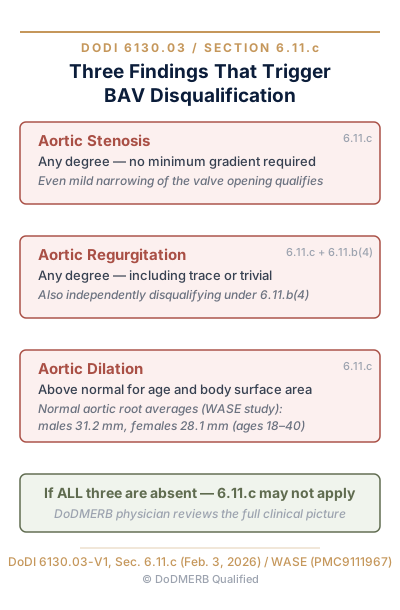
All three triggers operate on "any degree" with no minimum threshold. Normal aortic root averages provided for reference.
BAV Without Pathology vs. BAV With Pathology: The Distinction That Changes Everything
It is not the bicuspid aortic valve itself that disqualifies your student. It is what the echocardiogram reveals about how that valve is functioning.
Consider the two scenarios that drive every BAV case through DoDMERB.
In Scenario A, the echocardiogram shows no stenosis, no regurgitation, and no aortic dilation. The DoDI 6.11.c criterion requires BAV "with" pathology. If none of the three triggers are present, the standard as written may not be met. This is the outcome every parent is hoping for.
In Scenario B, the echocardiogram reveals any degree of stenosis, any degree of regurgitation, or aortic dilation. The Section 6.11.c criterion is satisfied. Disqualification follows.
The statistics offer cautious hope. Research in pediatric BAV populations consistently shows that a meaningful proportion of patients under age 20 have no associated valve pathology at the time of diagnosis. The Copenhagen Baby Heart Study found that roughly 66.8% of BAV newborns show no aortopathy at initial echocardiographic screening.
The counterweight: 40 to 60% of all BAV cases involve some degree of ascending aortic dilation. Regurgitation, even trace amounts that a civilian cardiologist might wave off as clinically insignificant, triggers disqualification under the "any degree" language. The path to qualification requires the echo to come back clean on all three counts.
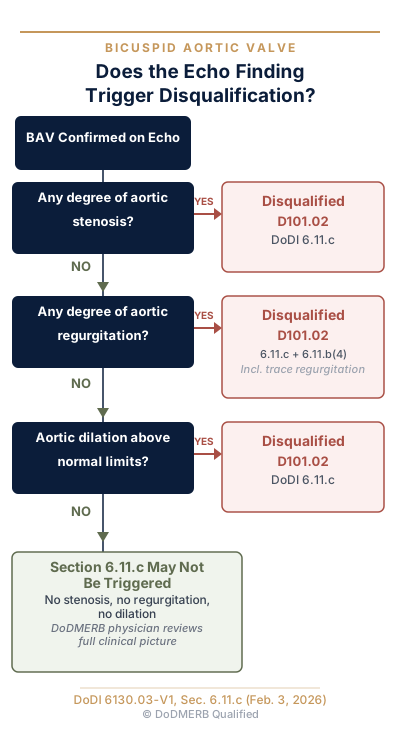
The three echo findings that determine whether BAV triggers DoDMERB disqualification under Section 6.11.c.
"Bicuspid aortic valve with regurgitation or stenosis. I'd say the biggest one [in the heart section]. Waivers are pretty tough with those types of conditions." — DoDMERB Qualified Medical Expert
The echo report language matters enormously. You need specific documentation: "No stenosis, no regurgitation, aortic root 28mm (within normal limits)" is the kind of precise, quantified language that supports your student's case. General statements like "functionally normal bicuspid valve" are less useful because they do not address the three specific triggers DoDMERB evaluates.
How DoDMERB Discovers a Bicuspid Aortic Valve
DoDMERB does not screen for bicuspid aortic valve as part of the standard exam, but the condition surfaces through two well-established pathways.
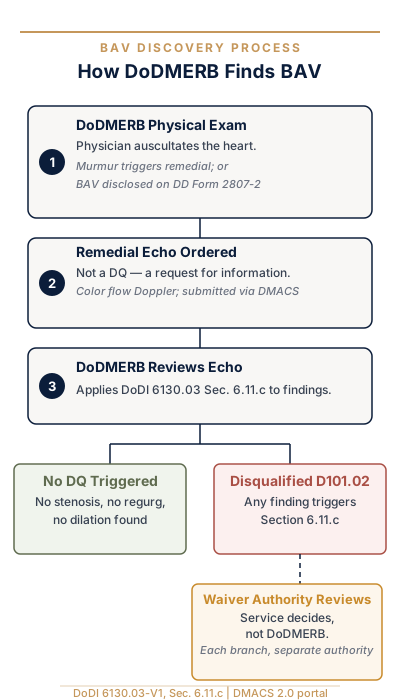
The two paths through which BAV surfaces during the DoDMERB process, from discovery to final determination.
The first pathway is clinical discovery during the DoDMERB physical. The exam physician hears a systolic ejection click, murmur, or other abnormal heart sound. This finding triggers a remedial request for an echocardiogram with color flow Doppler. The echo identifies the bicuspid valve anatomy and, critically, whether any associated pathology exists.
The second pathway is self-disclosure. Your student reports a known BAV diagnosis on the DD Form 2807-2 medical history questionnaire. If no recent echocardiogram is on file, DoDMERB requests one through the remedial process. Disclosure of a known condition reflects the integrity standard that every future officer should embrace.
After the echocardiogram is completed, results are submitted through DMACS (the DoDMERB online portal). A DoDMERB physician reviews the findings against the DoDI 6.11.c standard.
If the echo is clean, the physician may not apply the D101.02 disqualification code. If the echo shows any of the three disqualifying findings, D101.02 is applied and the file is forwarded to the appropriate service waiver authority.
Timing matters. Remedials typically add a few weeks to the DoDMERB process. For academy applicants, this can become critical given the April 15 hard deadline for completing the admissions file. ROTC scholarship recipients generally have more runway, but delays still create unnecessary stress.
Related: For a full explanation of how murmurs trigger the DoDMERB remedial process, see Heart Murmur and DoDMERB.
Waiver Reality for BAV Disqualifications
If your student has been disqualified under D101.02 for bicuspid aortic valve with associated pathology, a waiver is the only path forward. The honest assessment is that these waivers are difficult.
BAV with regurgitation or stenosis is one of the hardest cardiac conditions to get waived. The military's core concern is sudden incapacitation. Progressive aortic stenosis can cause syncope or sudden cardiac death. A dilating aorta carries the risk of dissection or rupture. A significant regurgitant jet can lead to heart failure over time. In combat and aviation environments, these risks are amplified in ways that civilian medical practice does not need to consider.
Each service branch evaluates BAV waivers through its own lens:
| Service Branch | BAV Waiver Eligibility | Key Constraint |
|---|---|---|
| Air Force (Flying Classes) | Case-by-case; ACS review required | All flying classes DQ; waivers are rare and require Aeromedical Consult Service evaluation |
| Air Force (Ground Duty) | Case-by-case | Lower bar than flying class |
| Navy/Marines (Aviation) | Generally not waiverable | Hard line for aviation duty |
| Navy/Marines (Ground Duty) | Case-by-case | Individual review |
| Army | Case-by-case | Accession bar is higher than retention |
Several factors strengthen a waiver case:
- Serial echocardiograms showing stable findings over multiple years of monitoring
- Normal exercise tolerance demonstrated on a stress test
- A cardiology evaluation documenting valve findings, symptoms, exercise tolerance, and any activity restrictions
- Findings at the absolute lowest end of the disqualification spectrum (mild rather than moderate or severe)
Factors that weaken a waiver case:
- Progressive valve dysfunction or aortic dilation shown on serial imaging
- Moderate or severe regurgitation or stenosis
- Aviation or special duty designator, which carries a higher medical bar than general line officer
No one can guarantee a waiver outcome. The waiver authority for each service, not DoDMERB, makes the final determination. DoDMERB identifies the disqualifying condition. The service decides whether to grant an exception.
DoDMERB Qualified
Is your student's bicuspid aortic valve a disqualifier or not?
We review your student's echocardiogram findings against the current DoDI standard and advise on documentation strategy before waiver review begins.
What to Do Now: Documentation and Next Steps
Whether your student is heading into the DoDMERB process or has already received a disqualification, the right documentation strategy makes a measurable difference.
If your student has not yet had the DoDMERB exam and has a known BAV diagnosis, get a current echocardiogram through your cardiologist. The echo should be within 12 months of the anticipated DoDMERB exam date. This gives you a clear picture of where your student stands before the official process begins. Keep the results at home. Do not submit medical records to DoDMERB unless they request them through a remedial.
If your student is currently in the DoDMERB process and has received a remedial requesting an echocardiogram, gather the following documentation and submit through DMACS when requested.
Current Cardiac Imaging
- Echocardiogram with color flow Doppler (within 12 months of DoDMERB exam)
- Cardiologist note documenting: BAV morphology, presence/absence of stenosis and regurgitation (with grading), aortic root and ascending aortic measurements in millimeters, clinical risk assessment
History and Stability Evidence
- Any prior echocardiograms showing stable findings over time (serial echos are the strongest evidence for a waiver)
- Exercise stress test results demonstrating normal functional capacity
Additional Studies (if ordered)
- Cardiac MRI results — only if the echocardiogram was inconclusive (an expensive study that DoDMERB does not pay for; do not obtain it preemptively)
- Cardiology evaluation documenting the diagnosis, treatment dates, current examination findings, functional ability, and any restrictions
When speaking with your student's cardiologist, ask them to document the specific absence of stenosis, regurgitation, and aortic dilation if those findings are truly absent. "No stenosis, no regurgitation, aortic root measures 28mm which is within normal limits for a male of this age" carries more weight than "functionally normal bicuspid valve." The DoDMERB physician reviewer is checking three boxes. Your documentation should address all three explicitly.
If your student has already been disqualified and you are pursuing a waiver, prepare the requested clinical records, including the cardiologist's findings on symptoms and functional ability during strenuous activity. Actual records carry more weight than a summary letter or civilian opinion on military fitness. Air Force rebuttals require clinical evaluations and records, not physician letters, statements, or memos.
Related: For a complete walkthrough of what happens after DoDMERB issues a disqualification, see The DoDMERB Waiver Process: A Complete Guide.
Frequently Asked Questions
Can my student still attend a service academy with a bicuspid aortic valve?
Yes, if the echocardiogram shows no stenosis, no regurgitation, and no aortic dilation. DoDI 6130.03 Section 6.11.c disqualifies BAV with those findings, not BAV alone. A clean echo on all three counts means Section 6.11.c is not triggered.
Does DoDMERB test for bicuspid aortic valve specifically?
DoDMERB does not routinely order echocardiograms. BAV is typically discovered when the exam physician hears a systolic ejection click or murmur, triggering a remedial echocardiogram. It also surfaces when the applicant discloses a known diagnosis on the DD Form 2807-2.
Is trace aortic regurgitation disqualifying when a student has BAV?
Under the current DoDI language ("any degree of regurgitation"), even trace regurgitation paired with BAV can trigger disqualification under Section 6.11.c. Additionally, mild or greater aortic regurgitation is independently disqualifying under Section 6.11.b(4) regardless of valve anatomy.
What if my student had BAV surgery as a child?
History of valvular repair or replacement is independently disqualifying under DoDI 6130.03 Section 6.11.a, regardless of current valve function. A waiver would be required and the outcome depends on the specific service branch and commission pathway.
Should we get an echocardiogram before the DoDMERB exam if BAV is already diagnosed?
Getting a current echo within 12 months before the DoDMERB process begins is a smart move. It tells you exactly where your student stands before any official determination is made. Keep the report at home and submit it only if DoDMERB issues a remedial requesting cardiac imaging.